
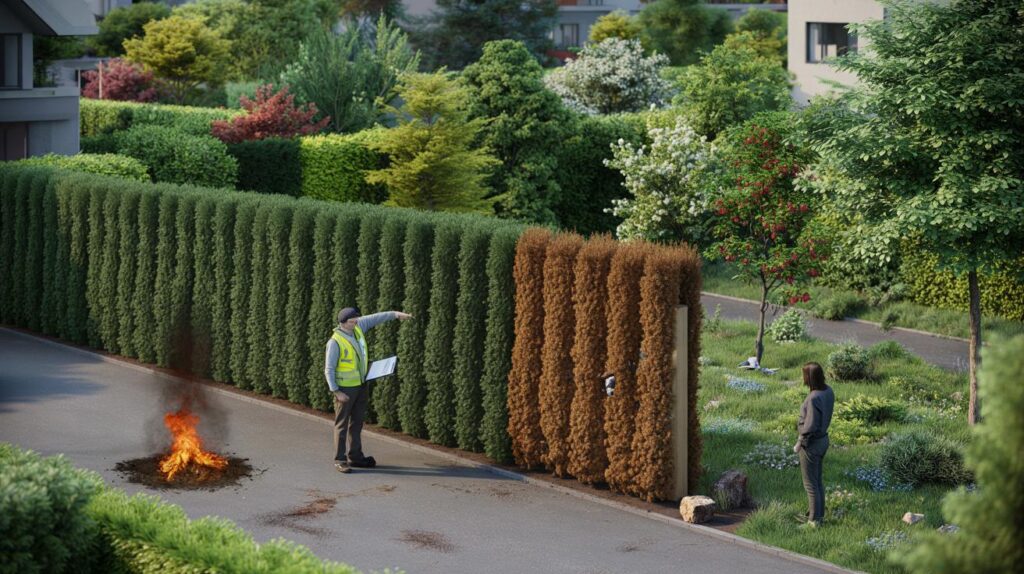
A similar situation is increasingly evident in building authorities : homeowners are planning a dense, evergreen hedge along their property line – but are being denied permission. The reason is not disputes with neighbors, but rather new municipal regulations. These regulations specifically target a particular type of hedge that was long considered a classic.
But why is this popular plant being targeted – and could your garden also be affected?
From classic to problem case: The Thuja hedge under scrutiny
We’re talking about the thuja, also known as the „arborvitae“. For decades, it was the first choice in many residential areas: inexpensive, fast-growing, dense, and green all year round. Those who wanted privacy often planted a whole row of them.
 Einfache Dehnbewegung reduziert Hüftschmerzen: Physiotherapeuten empfehlen tägliche Anwendung
- Hardly any benefit for animals and insects
- Negative impacts on the soil
- Increased fire risk
- Many old hedges are diseased or dying.
Thuja hedges are now often referred to as „green concrete“ – visually dense, but ecologically almost worthless and in some cases even risky.

New rules: How municipalities are intervening
To counteract these problems, many municipalities are relying on new regulations in building and planning law. Through development plans or design guidelines, they can precisely define which plants are permitted – and which are not.
- Recommended, site-appropriate plant species
- Prohibition of certain hedge types (eg Thuja monocultures)
- Specifications regarding height, spacing and maintenance
Those who disregard these rules may, in the worst case, have to remove the hedge and face fines. Existing hedges are usually tolerated – as long as they do not pose a danger.
However, many municipalities initially focus on education and even offer funding programs for switching to alternative planting.
Ecologically problematic: Why Thuja brings little benefit to nature
Many amateur gardeners think: as long as it’s green, then it’s good for the environment. But that’s not true for Thuja.
The plant negatively impacts the soil. As its needles decompose, they alter the pH level, making the soil more acidic. This makes it difficult for many other plants to grow there.
You can often find the following under a thuja hedge :
- Little soil life (eg earthworms)
- Hardly any fungi or microorganisms
- Almost no wild plants
In comparison , mixed, native hedges offer significantly more advantages:
- Habitat for numerous bird species
- Protection for small mammals
- Food for insects
- Natural pest control
In short: A Thuja hedge is green – but ecologically almost “dead”.
Fire risk: When the hedge becomes a danger
Fire protection is a particularly important point.

Thuja contains essential oils that are highly flammable – especially in hot and dry conditions. Even a small spark, for example from a cigarette or a barbecue, can be enough to set the hedge on fire.
- Rapid spread of fire
- High flame development
- Spread to buildings or fences
In densely built-up areas, Thuja hedges act like a kind of „fire conduit“ in an emergency, spreading fires from property to property.
Many hedges are already at the end of their lifespan.
Another problem: Many thuja hedges are now old. Plants from the 1970s and 80s in particular are reaching the end of their natural lifespan.
- Brown and bald patches
- Thinning structure
- Fungal infestation
- Instability during storm
This not only leads to visual problems, but can also be dangerous. For many municipalities, this is a reason to promote the switch to modern, naturalistic planting.
What to do if your own hedge is affected?
The most important step is to clarify the situation with the local council or building authority. There you will find out which regulations apply to your property.
When a replacement becomes necessary, experts usually recommend a complete restart rather than individual repairs.
Step by step: Replacing Thuja
- Trim and remove hedges
- Remove roots completely
- Improve soil (compost + lime)
- Dispose of plant remains properly
- Planning a new, diverse hedge
These alternatives are in demand
- Hornbeam
- Hawthorn
- Dogwood
- hazel
- Rowanberry
- sloe
These plants offer flowers for insects, fruit for birds, natural privacy screening, and greater stability.
In some regions, there is even financial support available for such plantings.
Garden owners should check this now
- Are there local regulations against certain hedges?
- Is your property located in a high-risk area?
- Is your hedge already showing signs of damage?
- Would you like to bring more nature into your garden?
Conclusion: More nature, less risk
Even if saying goodbye to the classic Thuja hedge is initially unusual – the switch brings many advantages.

- More resistant to extreme weather
- Promotes biodiversity
- Reduces fire risks
- Brings more color and life to the garden
The trend is clearly towards sustainable, vibrant garden structures – and that is precisely where the opportunity lies for every garden owner.